Stay connected with us!

Serving Northern Virginia and the Shenandoah Valley

Water Softener Repair

Hard water can quickly turn into an everyday frustration, from cloudy glassware and mineral buildup to soap that barely lathers. Professional water softener repair can get to the source of the problem and help bring back the softer, better quality water your home relies on.

At Potomac Plumbing & Gas, we diagnose issues such as salt bridging, brine tank trouble, resin problems, and faulty valves. We focus on what your system actually needs, providing practical repairs that restore performance and help you get more life from your equipment.

How can we help you?

Water Softener Repair Service

A water softener can experience several mechanical and operational problems during its service life. Some failures are obvious, while others begin with small changes in water quality, pressure, salt consumption, or the way the unit sounds during regeneration.

Our water softener repair service begins with an assessment of the system and its current performance. We inspect the components that influence softening, including the brine tank, resin bed, control valve, settings, and other operating parts.

Finding the source matters because similar symptoms can have very different causes. By examining the complete system, we can recommend a repair based on what is actually happening rather than temporarily masking the problem.

Common Signs You Need Water Softener Repair

You do not need to wait until your system completely stops working to request service. Water softeners often provide noticeable clues when something is wrong, and responding to those changes early may help prevent a more extensive failure.

Watch for signs such as:

  • White scale returning to faucets or showerheads
  • Spots appearing on dishes and glassware
  • Soap becoming harder to lather
  • Changes in the way your skin or hair feels
  • Unusual grinding or clicking during regeneration
  • A salty taste in the water
  • Excessive salt consumption
  • Lower water pressure throughout the home
  • Hard water symptoms returning unexpectedly
 

These problems may be associated with resin, valves, regeneration settings, salt bridging, or other components. An inspection allows us to identify the reason your softener is struggling and select an appropriate repair.

Common Water Softener Problems We Repair

A softener contains several parts that must work together every time water is treated or the unit regenerates. Wear, mineral accumulation, salt problems, and mechanical faults can interrupt that process and gradually reduce performance.

Knowing what can go wrong helps explain why professional diagnosis is so valuable. Rather than assuming that adding more salt or resetting the controls will solve everything, we can determine which part of the system requires attention.

Salt Bridging and Brine Tank Trouble

Salt bridging occurs when a hardened layer forms inside the brine tank. Although the tank may appear to contain plenty of salt, the hardened material can prevent the system from producing the brine it needs for proper regeneration.

A tank that remains unusually full of water can indicate another problem. According to our service information, a clogged drain line or faulty float valve can prevent the unit from drawing brine correctly during its regeneration cycle.

Correcting these conditions allows the softener to return to its normal operating process. We can examine the tank, determine what is interfering with brine production or draw, and address the source rather than repeatedly adding salt.

Resin Bed Problems

The resin inside a traditional water softener plays a central role in treating hard water. Over time, resin can become coated with iron or minerals, reducing the system’s ability to perform efficiently.

A clogged resin bed may also restrict flow. If you notice low water pressure throughout the house, the softening system may be one possible source of that restriction. Our materials specifically identify clogged resin and dirty internal components as potential causes of pressure loss.

Depending on its condition, professional attention to the resin may help restore performance. We assess the system before recommending what should be cleaned, repaired, or replaced.

Control Valve and Regeneration Problems

Regeneration allows the softener to refresh its ability to treat incoming water. When controls, timers, valves, or related components stop functioning properly, the system may regenerate incorrectly or fail to complete the process.

You might notice excessive salt use, strange sounds, unexpected water levels, or the return of hard water. Incorrect settings can also make a system use more salt and water than necessary.

Our expert plumbers can inspect the controls and valve operation while reviewing how the unit is cycling. Correcting these problems helps return the system to more efficient and dependable performance.

Water Softener icon

What Happens During Water Softener Repair?

Good diagnostics come before good repairs. Instead of replacing parts based solely on symptoms, we examine the system to understand how its components are performing together.

A typical assessment may involve:

  1. System inspection: We look for leaks, worn components, incorrect settings, and visible operating problems.
  2. Brine tank check: We examine the tank for salt bridging, sludge, unusual water levels, and proper operation.
  3. Resin evaluation: The resin is considered for mineral or iron buildup that may reduce performance.
  4. Control valve testing: Valves and timers are checked to determine whether regeneration is occurring correctly.
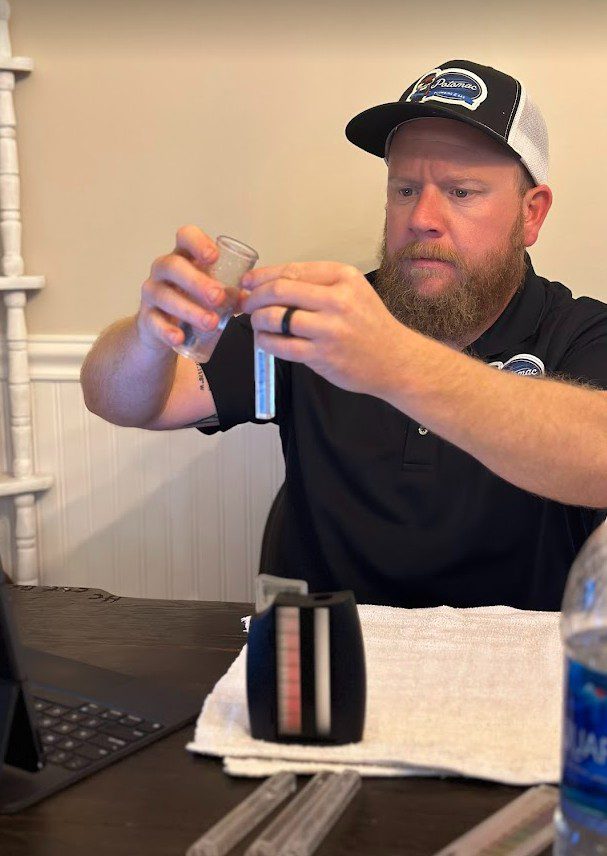
  5. Water testing: Water hardness may be checked to see whether the unit is producing the intended result.
 

These steps give us a more complete view of the problem. Once we know what is wrong, we can explain the findings and recommend a solution appropriate for the condition of your equipment.

Water Softener System Repair

Benefits of Prompt Water Softener Repair

It is easy to tolerate a few water spots or assume that using more salt will correct a struggling system. However, allowing a softener problem to continue can mean living with mineral rich water while an underlying mechanical issue remains unresolved.

Professional repair can provide benefits such as:

  • More consistent soft water
  • Reduced mineral buildup on fixtures
  • Better soap performance
  • More efficient salt and water use
  • Improved system operation
  • Protection for water using appliances
  • Lower likelihood of a larger unexpected failure
  • Longer useful life for repairable equipment
 

Routine care can also uncover smaller problems before they become more expensive failures. Our water softener service materials emphasize professional inspections and cleaning as ways to maintain efficiency and extend system life.

A properly operating softener should make life easier, not create another household chore. When its performance changes, having the problem diagnosed early can help bring that convenience back.

Testing Water

Should You Repair or Replace Your Water Softener?

A malfunction does not automatically mean your water softener needs to be replaced. Many issues involving salt bridging, valves, controls, settings, and other serviceable components may be candidates for repair.

Age and overall condition still matter. Our materials indicate that a properly maintained water softener can typically provide around 10 to 15 years of service, although water hardness, household usage, and maintenance can affect its lifespan.

When Repair May Be the Practical Choice

A repair can make sense when the unit is relatively young and the problem involves a specific component that can reasonably be serviced. A softener that has otherwise performed reliably may still have plenty of useful life remaining.

We consider more than the immediate malfunction. The condition of the resin, valves, tank, controls, and overall system helps determine whether putting money into the existing equipment represents good value.

Our goal is to provide enough information for you to make a comfortable decision. If a practical repair can restore reliable operation, we can explain what is involved and why it is recommended.

When Replacement Deserves Consideration

Repeated repairs on an aging system may eventually become less economical. If several components are deteriorating or the softener continues experiencing performance problems, replacement may deserve consideration.

There is no benefit in recommending a larger solution before the system has been properly evaluated. Diagnosis comes first so you understand what failed and what options are available.

Whether repair or replacement makes more sense, Potomac Plumbing & Gas focuses on dependable water solutions suited to your household and equipment.

Why Choose Professional Water Softener Repair?

Water softeners combine plumbing, mechanical components, controls, resin media, and regeneration settings in one system. A problem in one area can create symptoms that appear to originate somewhere completely different.

Professional service removes much of that uncertainty. Instead of repeatedly changing settings or adding salt, you receive an assessment focused on the actual source of the malfunction.

Professional Service Gives You
  • Detailed diagnostics: We inspect the system instead of guessing from a single symptom.
  • Experienced repair: Our services include salt bridging, resin issues, faulty resin tanks, and valve failures.
  • Clear explanations: We discuss what we find and what the equipment needs.
  • Focused solutions: Repair work targets the cause of poor performance.
  • Ongoing support: Routine attention can help reduce future problems.
 

Potomac Plumbing & Gas provides water treatment and water softener services with a focus on clean workmanship and clear communication. Our source material also confirms that we repair all types of softeners and work to restore efficient, effective operation.

Choose Potomac Plumbing & Gas for Water Softener Repair

Hard water problems can quickly become noticeable throughout your home, but you do not have to settle for mineral buildup, spotted glassware, poor soap performance, or a softener that no longer works the way it should. Potomac Plumbing & Gas provides professional water softener installation and water softener repair backed by careful diagnostics and dependable service.

We can address salt bridging, resin problems, malfunctioning valves, brine tank concerns, and other issues that interfere with normal operation. Our focus is on finding the source of the problem, explaining your options clearly, and restoring efficient performance whenever repair is the right solution.

Give your water softener the professional attention it needs before a small problem becomes a larger inconvenience. Contact Potomac Plumbing & Gas today to schedule your water softener repair service and get your home’s water quality back where it belongs.

Frequently Asked Questions

Water softener trouble can be confusing because the first symptom may appear at a faucet rather than at the equipment itself. These answers address common concerns about performance, maintenance, repair, and the signs that professional attention may be needed.

Watch for changes in your water. Scale on faucets, spotted glassware, poor soap lather, or dry skin and hair can mean your softener is not working properly. A professional inspection can find the cause and determine what needs attention.

If your brine tank stays unusually full, a clogged drain line or faulty float valve may be the cause. Simply removing the water will not fix the underlying problem. Our technicians can find the issue and get your system working properly again. A timely repair can also help prevent the same problem from coming back.

Yes. Clogged resin or dirty internal filters can restrict water flow and cause low water pressure. Our technicians can inspect the softener, find the source of the problem, and recommend the right solution to restore proper flow. Addressing the issue early can also help prevent added strain on your system.

We recommend having your water softener checked about once a year. Regular service can catch salt bridges, resin issues, and other small problems early while helping your system continue to work efficiently. Routine maintenance can also help extend the life of your equipment and reduce the risk of unexpected repairs.

Using more salt than usual may mean your softener is regenerating too often or not working efficiently. An inspection can identify the cause and determine whether cleaning, adjusting the settings, or a repair is needed. Fixing the issue can help reduce unnecessary salt and water use while keeping your system running efficiently.

Maintaining clean, soft water is easier when your system receives the care it needs. Taking care of minor issues early helps prevent bigger plumbing problems and keeps your water softener performing efficiently. If you ever have questions or need professional assistance, our team is ready to provide dependable solutions and expert support every step of the way.

These questions cover some of the most common warning signs, but every water softener can behave differently depending on its condition and household demand. When water quality, pressure, regeneration, or salt consumption changes unexpectedly, an inspection can provide a clearer answer.

Taking care of the problem early may also protect the equipment from unnecessary wear. Potomac Plumbing & Gas can evaluate the system, explain what we find, and recommend a practical next step.

Stay connected with us!

Serving the areas surrounding Gainesville, Virginia